Q&A with Steff Wright: The Story Behind Studio G
It’s not always easy to have your architect and construction team on the same page. When Gusto Construction started looking for more sustainable ways to build over 25 years ago, finding architects who shared the same values was difficult.
Instead of waiting for the industry to catch up, Gusto Construction Founder, Steff Wright, decided to start his own practice with Noel Barrowclough, and that was the beginning of Studio G.
To mark over two decades of architectural design and growth, we sat down for a Q&A with Steff, to discuss how Studio G was established and where the practice is heading next.

25 Years of Sustainable and Innovative Design
What inspired you to start Studio G?
“Back in the late 1990s, we were trying to push the boundaries of sustainable development. We wanted to build homes that were more energy-efficient, better to live in, and kinder to the environment than the industry standard. The trouble was that very few architects back then had the experience in sustainability that we required.
So, we decided to bring architectural design capability straight into the business. What started out as an in-house practice has resulted in what Studio G is today, an independent architecture practice.
Traditionally in construction, an architect completes a job, the team on site finishes, and the lessons learned disappear. By bringing Studio G into Gusto Group, we were able to keep design and construction under one roof. Every innovation, site lesson, and detail stays inside our group of businesses. Over 25 years, we’ve developed a culture where design and build can constantly learn from each other.”
What was the very first project, and what do you remember about it?
“In the early days, we worked on small local projects around Lincoln and the surrounding areas.
Once Studio G became a bit more established, we began delivering projects such as Pitomy Farm [LINK] and other developments in Lincoln. They weren't huge projects, but they allowed us to test new ideas and refine our approach.
As Studio G grew, we began working for external clients, which broadened our expertise. The team has delivered schools, retirement living schemes, and commercial projects, all of which brought valuable experience back into the practice. Studio G developed deep expertise in designing extra care and retirement facilities, such as Home Grange, which is a 36-apartment scheme in Lincoln.”
Can you tell us about a standout project that defines Studio G’s values and philosophy?
“Woodlands Edge, without a doubt.
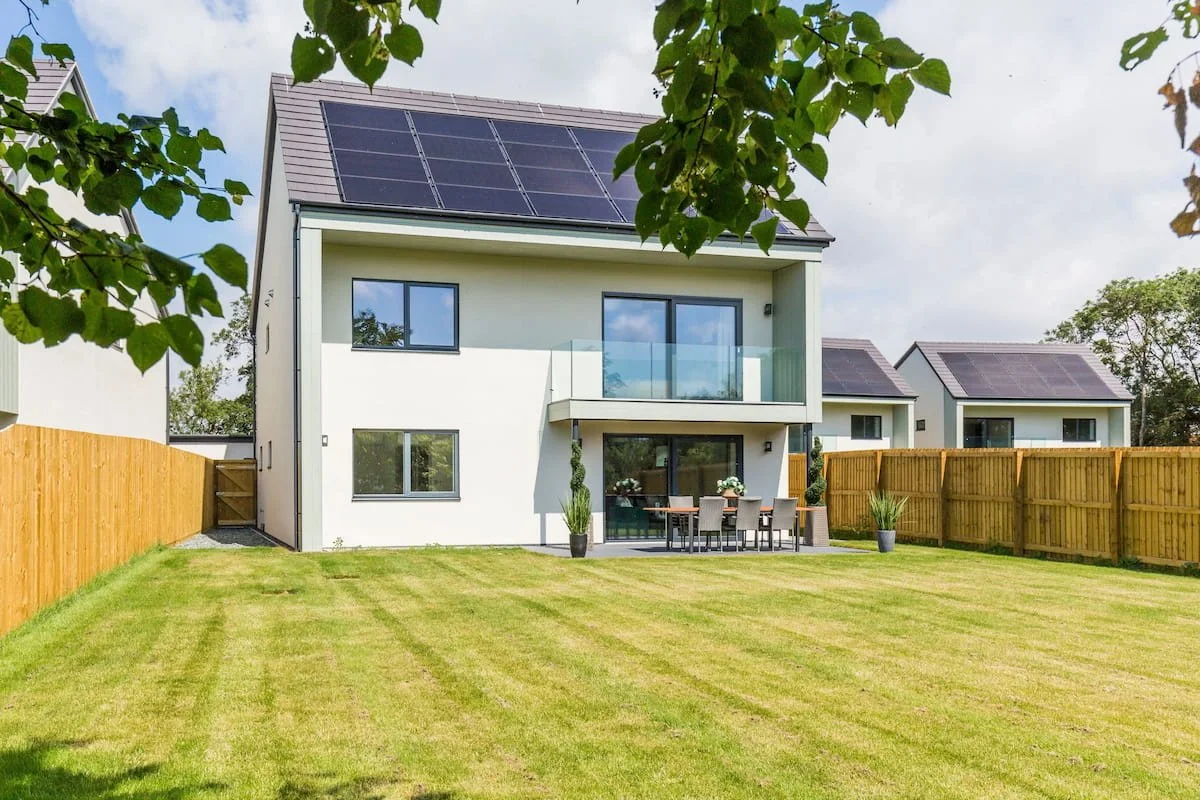
It wasn’t just about the houses, but it was about the community within them. We challenged standard thinking around energy efficiency, landscaping, biodiversity, community and wellbeing.
We created a community where people could not only connect with each other, but with nature too. I know that firsthand because I live there! It's special to live within a community you've designed and experience for yourself what's working and where future designs can improve.
Woodlands Edge taught us a huge amount and continues to influence the developments we’re designing today.”
What is a common misconception about Studio G?
“That the team only work on Gusto Construction projects! Studio G have a wide portfolio of work for a mix of independent clients; alongside the work they deliver for Gusto Construction.”
Studio G is passionate about designing for people and the planet. How do you push boundaries on sustainability?
“In most architecture practices, there is very little connection between the people who design buildings and the people who end up living or working in them years later. But that’s not the case at Studio G.
We design communities where some of our colleagues live, our offices are based within one of our developments, and we maintain long-term relationships with residents and occupants. That means we receive continuous, real-world feedback about what works and what doesn't.
How comfortable are the spaces during a heatwave? How effective is the ventilation system in practice? Do people use community spaces in the way we intended? What maintenance details arise over time?
That information flows straight back to us. Every project becomes an opportunity to learn and improve, which is why we’ve remained at the forefront of sustainable architecture for over two decades.”
How do you think Studio G will evolve as Gusto Group transitions to being Employee-Owned?
“I think the practice will become even stronger and more innovative.
The move to employee ownership changes the way people think about success. When our team are co-owners, everyone is directly invested in the long-term success, reputation, and quality of what we design.
It creates greater internal collaboration, deeper knowledge sharing, and complete alignment around our core values.
As employee ownership develops, the best design ideas will travel faster, innovation will accelerate, and ultimately our clients and communities will benefit.”
Looking Ahead
From custom residential developments and educational projects to retirement schemes, Studio G brings practical and sustainable design to every brief. As we transition to an employee-owned company, that commitment to thoughtful, long-lasting architecture is stronger than ever.
Whatever you are looking for, we would love to chat about your next project.